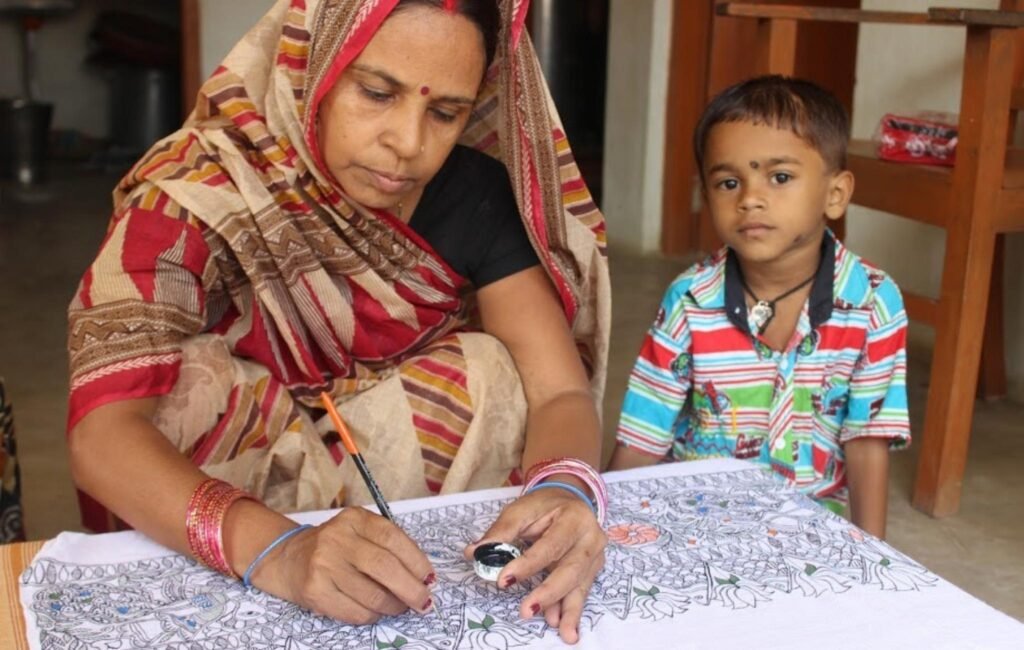
Mithila Painting, Imagine being in a small village in the Mithila Region of India, surrounded by lively colours, geometric shapes, peacocks, lotus flowers, and scenes of folklore painted on the exterior of the homes during the festival season. The women sit together as they paint each individual line with hand-painted brushes; using natural plant-based colours in each line’s creation.
This is the enchanting world of Mithila Art; an artistic tradition that has been around for hundreds of years, based on storytelling and cultural tradition.
In today’s world where modern art has developed into a digital/commercial medium, Mithila Art has a strong following of global art enthusiasts due to its unique style, heartwarming quality and hand-made artwork.
This article will provide you with a better understanding of the history, artistic styles, symbology and global significance of Mithila Art and why it needs to be appreciated by everyone around the world.
What Is Mithila Painting?
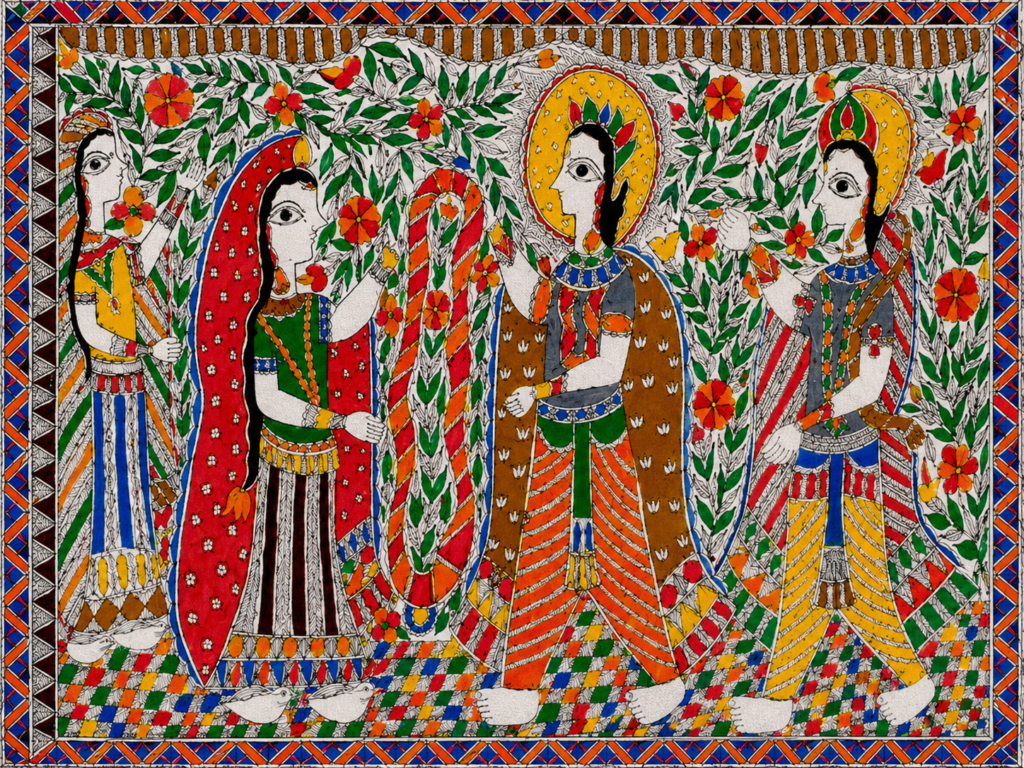
Mithila painting is a form of folk art originating in the Mithila region of Northern India. This form of folk art is also popularly known as Madhubani art because most of its well-known artists hail from the Madhubani district of Bihar.
Traditionally, Mithila paintings were made on the mud walls and courtyards of new brides’ homes during weddings, religious festivals, and other celebratory occasions, and they were painted by women within the community to wish for abundance, peace, and blessings from the divine.
In more recent times, Mithila paintings have been created on handmade paper, canvas, textile, and displayed internationally in various galleries rather than just on the walls of villages.
Today, this ancient folk art has become one of India’s most recognized traditional art forms.
The History of Mithila Painting
The tradition of Mithila Painting goes back many centuries, with roots in the ancient past. According to legend, Mithila Painting originated from the time of Sita’s and Rama’s wedding.
King Janak is said to have commissioned craftsmen from across the land to create wall and palace decorations for his daughter’s wedding. Thus began a great tradition of Mithila Painting.
Women’s craftsmanship has been handed down from mother to daughter throughout history, allowing for the preservation of our customs, rituals, and stories of Mithila’s people before written history existed.
Because of all of these factors, Mithila Paintings represent much more than simply an artistic style; rather, they are also living examples of a culturally significant heritage.
Why Mithila Painting Is Unique
1. Every Painting Tells a Story
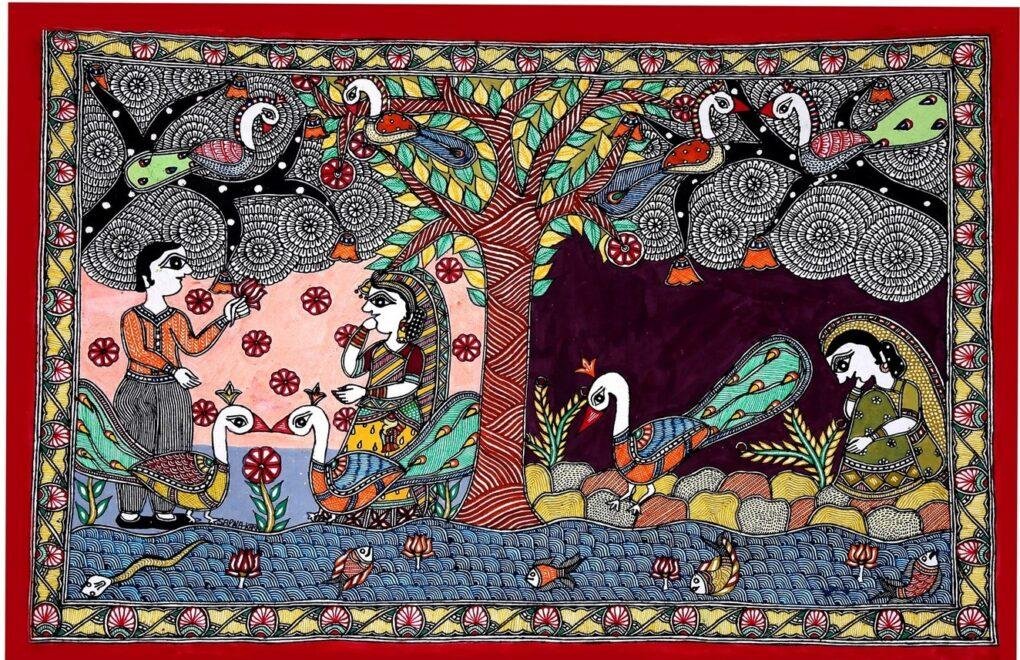
Mithila Painting is an art form that tells a story; artists depict events from mythological stories, daily life in the community, special events/festivals, and principal aspects of nature (including ways of connecting with the spiritual being). Mithila Painting differs from other forms of mass-produced decorative arts because they each possess a strong emotional/cultural significance.
2. Natural Colors Are Traditionally Used
Many of the colours used in the creation of traditional Mithila paintings were created from natural materials such as flower petals, turmeric, charcoal, rice paste (made from boiled rice), leaves, and earth minerals.
3. No Empty Space Is Left Blank
Another unique feature of Mithila Painting is its detailed design style. Artists fill almost every part of the artwork with flowers, geometric patterns, vines, birds, or symbolic motifs.
This creates a visually rich and mesmerizing appearance.
4. Reflects Rural Indian Culture
Mithila Painting represents the traditional way of life and the rural culture of India, being deeply connected to their spiritual connection to nature through the rituals of their villages and the emotions associated with nature. They have demonstrated that much of what is traditional would be forgotten if it were not for this art form.
Symbolism in Mithila Painting
Symbols play an important role in Mithila Painting. Every element carries a deeper meaning.
Some common symbols include:
- Fish – Prosperity and fertility
- Lotus Flower – Purity and spirituality
- Peacock – Love and beauty
- Sun and Moon – Energy and protection
- Trees and Nature – Harmony between humans and nature
These symbols make Mithila Painting visually beautiful as well as spiritually meaningful.
Different Styles of Mithila Painting
Over time, several styles of Mithila Painting developed in different communities of Mithila.
Bharni Style
Known for vibrant colors and mythological themes.
Kachni Style
Famous for fine lines and intricate detailing.
Godna Style
Inspired by traditional tattoo patterns.
Tantrik Style
Focused on spiritual and religious symbolism.
Each style represents the creativity and diversity of Mithila culture.
Why Global Art Lovers Appreciate Mithila Painting
Handmade Authenticity
Mithila Painting is a form of art that reflects the human condition and represents genuine creativity while others are digitally produced or manufactured.
Art enthusiasts are drawn to the fact that every piece has imperfections caused by hand-drawing.
Cultural Depth
Mithila Painting is more than simply decorative art; within each painting there exists mythology, tradition, history, and emotional stories.
Collectors and scholars worldwide appreciate the cultural richness of this art form.
Support for Women Artists
For many women living in rural Bihar and Nepal, Mithila Painting provides them with economic independence and visibility within their communities.
By purchasing authentic Mithila art, you help support local artist communities.
Sustainable and Eco-Friendly Art
Mithila Painting is made using natural pigments and traditional hand techniques; thus, it is environmentally friendly.
This is an appealing characteristic for contemporary art purchasers who are interested in sustainable forms of creative expression.
Mithila Painting in Modern Times
Mithila Painting is now being created for use on a variety of surfaces; it is no longer limited to only paper and canvas, but is also appearing on sarees, home décor items (e.g., tapestries), walls, fashion accessories, and exhibitions around the world.
As Mithila artists gain recognition all over the world, they play an important role in preserving this millennia-old art form for generations to come.
Social media and other forms of media have made it possible for Mithila Painting to be appreciated by people living outside of South Asia.
How to Identify Authentic Mithila Painting
If you want to purchase genuine Mithila Painting, look for these features:
- Hand-drawn intricate patterns
- Traditional cultural themes
- Natural or earthy colors
- Detailed borders and filled spaces
- Signature or artisan details from local artists
Authentic Mithila Painting carries emotional depth that machine-made copies often lack.
Why Mithila Painting Should Be Preserved
Cultural identity and women’s artistic heritage are preserved through the continuation of traditional art forms, such as Mithila Painting. It is vital that we continue to support local artists through the promotion of awareness surrounding the preservation of this incredibly unique form of folk art.
Final Thoughts on Mithila Painting
Mithila Paintings represent much more than just an artistic form of expression; they are an expression of culture, a way to tell stories, a way to show spiritualism as well as an outpouring of human creativity. Mithila Paintings have been around for thousands of years, decorating the walls of homes and temples in rural villages throughout Bihar and India as well as being shown at major museums around the world.
If you are a global art lover looking for something to fill your wall with beautiful and vibrant colour, look no further than Mithila Painting!
FAQs About Mithila Painting
What is Mithila Painting famous for?
Mithila Painting is famous for its colorful patterns, mythological themes, and detailed handmade designs.
Where did Mithila Painting originate?
Mithila Painting originated in the Mithila region of Bihar, India, and parts of Nepal.
Is Mithila Painting and Madhubani Painting the same?
Yes, Madhubani Painting is a popular name for Mithila Painting because many artists belong to the Madhubani district.
Why is Mithila Painting important?
Mithila Painting preserves cultural traditions, storytelling, and folk heritage passed through generations.
Which colors are traditionally used in Mithila Painting?
Traditional Mithila Painting uses natural colors made from flowers, leaves, turmeric, charcoal, and rice paste.